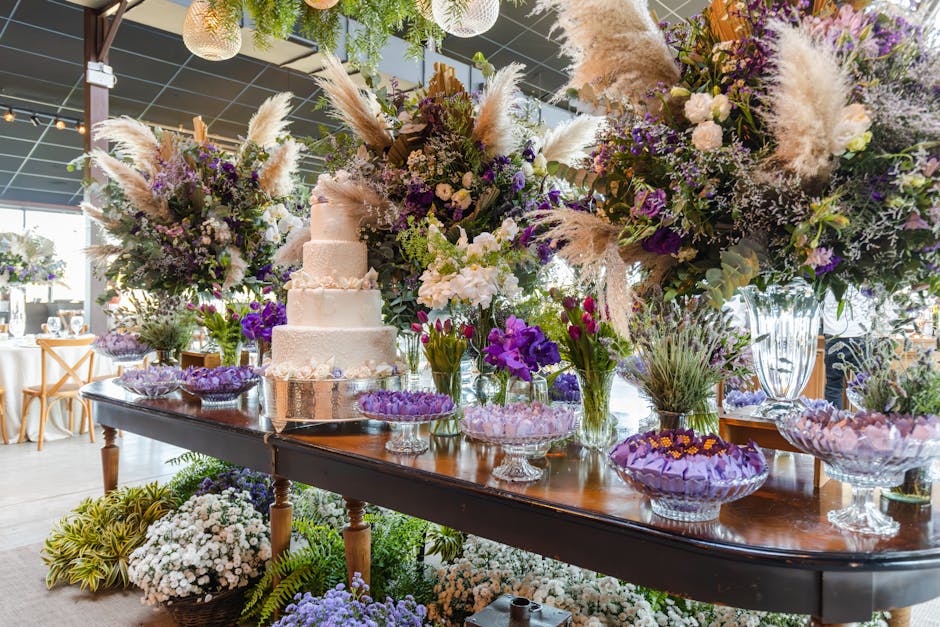
Common problems with wedding flowers in Hertford venues
Posted on 20/10/2026
Wedding flowers should feel effortless on the day, but in Hertford venues they can become one of those details that suddenly needs a lot more attention than expected. A staircase that looks romantic in the viewing appointment may be awkward for an arch. A historic room can be lovely, then unexpectedly dim by late afternoon. And a bouquet that looked perfect in the florist's shop can read very differently once it is under chandeliers, candlelight, or bright daylight at the venue.
That is really the heart of Common problems with wedding flowers in Hertford venues: not that flowers go wrong, but that venue conditions, timing, temperature, and layout can change how they look and perform. If you are planning a wedding in Hertford, this guide will walk you through the usual pitfalls, why they happen, and what to do about them so the flowers feel considered rather than stressful. And yes, a little forward planning goes a very long way.
Table of Contents
- Why common problems with wedding flowers in Hertford venues matters
- How common problems with wedding flowers in Hertford venues works
- Key benefits and practical advantages
- Who this is for and when it makes sense
- Step-by-step guidance
- Expert tips for better results
- Common mistakes to avoid
- Tools, resources and recommendations
- Law, compliance, standards, or best practice
- Options, methods, or comparison table
- Case study or real-world example
- Practical checklist
- Conclusion
- Frequently asked questions
Why Common problems with wedding flowers in Hertford venues Matters
Flowers do more than decorate a room. They frame the ceremony, shape the photographs, set the tone for the reception, and quietly tie everything together. In Hertford, where you may be dealing with a mix of period buildings, riverside spaces, village-style settings, and modern event rooms, those flowers have to work with very different backdrops. That is where the common problems begin.
A venue can look easy to dress on paper and then turn out to have narrow access, limited setup time, low ceiling clearance, or restrictions on where florals can be fixed. Some spaces feel warm and intimate in winter, but in summer they can become surprisingly hot by the windows. Others look bright on a weekday viewing but become much harsher, or much darker, once the actual ceremony time arrives. It sounds minor until you are watching a bride's bouquet wilt at 2:30pm in soft July heat. Not ideal.
Understanding these issues matters because floral mistakes are rarely cheap to correct on the day. If the pedestal arrangements are too tall, guests may not see each other. If the bouquet is too delicate, it may not travel well. If the installation cannot be secured properly, the venue team may have to step in quickly. The stress is avoidable, mostly. That is the good news.
Expert summary: The best wedding flowers for Hertford venues are not just beautiful; they are venue-aware, season-aware, and built around the realities of access, timing, temperature, and room layout.
How Common problems with wedding flowers in Hertford venues Works
Planning wedding flowers is a little like solving a small design puzzle. You start with the venue, then the season, then the colours, then the practicalities of how everything gets in, up, and looking right. The problems usually appear where one of those pieces clashes with another.
Here is the typical chain of events. A couple chooses their flowers and style. The florist sketches a proposal. Then someone visits the venue and spots a doorway that is narrower than expected, a room that needs arrangements visible from 360 degrees, or a ceremony table that sits awkwardly beneath a low beam. Suddenly the original idea needs adjustment. That does not mean the vision is wrong. It just means the plan needs to respect the space.
In Hertford venues, the most common issues tend to fall into a few broad groups:
- Scale problems: arrangements too large, too small, or simply the wrong visual weight for the room.
- Climate problems: warmth, direct sunlight, drafty entrances, or cold storage gaps affecting freshness.
- Logistics problems: loading access, parking, setup windows, and staircases slowing installation.
- Layout problems: ceremony sightlines, table spacing, top-table height, and guest flow.
- Styling problems: colours that clash with venue interiors or flowers that photograph differently than expected.
To be fair, these are not Hertford-only problems. But local venues often combine older architecture with varied room sizes, which makes planning just a touch more nuanced. One venue may be perfect for low, romantic table flowers, while another practically asks for an airy, vertical design. Same town, very different needs.
That is why the best florists do not just ask "what flowers do you like?" They also ask about the room, the time of day, and how the day is flowing. If they do not, well, that is a small red flag.
Key Benefits and Practical Advantages
When you plan around the common flower problems early, you are not being fussy. You are protecting the look, the budget, and the calm of the whole day. There are some very real advantages to doing this properly.
- Better value: flowers that are scaled correctly for the venue look fuller and more intentional, rather than expensive but oddly placed.
- Smoother timing: arrangements arrive and are installed without last-minute scrambles.
- Stronger photos: blooms that suit the room and light tend to photograph far better.
- Less waste: you avoid overspending on items that do not actually suit the space.
- More comfort for guests: table arrangements and aisle pieces do not block conversation or movement.
- Lower day-of stress: everyone, including the venue staff, has a clearer plan.
There is also something else, a bit harder to quantify. When flowers are right for the venue, the whole wedding feels more polished. You can almost feel it as guests walk in: the room breathes better, the colour palette makes sense, and nothing seems forced.
That is especially useful if you want your wedding to feel elegant without becoming overdone. In our experience, the weddings people remember most often are not the ones with the most flowers. They are the ones where every floral choice seemed to belong there.
Who This Is For and When It Makes Sense
This topic matters for anyone planning flowers in Hertford, but it is especially useful if any of the following sound familiar:
- You have booked a venue but have not yet finalised floral styling.
- You are choosing between a few different bouquet or centrepiece designs.
- Your venue has been described as "tricky," "intimate," or "historic."
- You are planning a summer wedding and worried about flowers lasting through the day.
- You want flowers that look expensive and elegant without overshooting the budget.
- You are working with a venue team that has some decoration rules or setup limits.
It also makes sense for couples who have already chosen a style, but want to sense-check it against real venue conditions. A cascading bouquet might be gorgeous, for example, but if the ceremony involves stairs, hugs, and a fairly long walk for photographs, you may want to think about a slightly different shape. Practical, not dull.
This is where a good local florist earns their keep. They help you match the romance to the reality, which is honestly what most couples need.
Step-by-Step Guidance
If you want to avoid the common problems with wedding flowers in Hertford venues, the easiest route is to work methodically. Here is a simple approach that keeps decisions grounded.
- Start with the venue layout. Ask for room dimensions, table plans, ceremony setup details, access times, and any decoration restrictions.
- Check the light. Visit the room around the same time of day as your ceremony or reception if possible. Natural light changes everything.
- Identify floral priorities. Decide what matters most: bouquet impact, ceremony flowers, table arrangements, or all three.
- Match style to function. A tall arrangement may suit a large room; a low, loose design may work better for long dining tables.
- Choose flowers with the venue in mind. Delicate blooms are lovely, but sturdier flowers are often safer for long days and travel.
- Build in flexibility. Ask whether arrangements can be reused from ceremony to reception, or moved between spaces.
- Confirm logistics in writing. Setup times, delivery points, and contact names should all be clear before the day.
One small but useful habit: take photos of the venue on your phone, even if they are a bit awkward and slightly crooked. You will use them later more than you think. A quick image of the tables, the entrance, and the ceremony backdrop can save a lot of guesswork.
If you are still early in planning, browsing styles such as wedding collections can help you narrow the overall feel before committing to specific arrangements. If you are focusing on the bride's bouquet in particular, the options under bridal bouquets are a useful starting point.
Expert Tips for Better Results
There are a few things experienced florists tend to notice quickly, and they are the sort of details that can quietly make or break the day.
1. Design for the room, not just the Pinterest board
A bouquet or centrepiece may look stunning in a styled shoot, but your venue may have low ceilings, dark wood, patterned wallpaper, or large windows. Those details change the final effect. A more open, structured design often works better in a busy room than a tightly packed arrangement that visually disappears.
2. Keep scent under control
Strong fragrance can be lovely in moderation, but it can also compete with food, perfume, and the general atmosphere of the day. Lilies, roses, and other scented flowers can be beautiful; just make sure the intensity suits a seated dining space. No one wants the room to smell like a perfume shop, let's be honest.
3. Use sturdy flowers where traffic is high
At entrances, near bars, or around the dance floor, flowers get brushed past, photographed, and occasionally nudged. Sturdier blooms and secure mechanics help the display last better. For boutonnieres, buttonholes, and corsages, the same principle applies. If the item will be handled a lot, choose a design that can take it.
4. Think in zones
Not every part of the venue needs the same floral intensity. A ceremony area might need the wow factor, while the tables need lower designs that keep conversation easy. This zoned approach often saves money and looks more considered than scattering small arrangements everywhere.
5. Ask what can be moved and reused
One of the smartest ways to stretch a floral budget is to reuse ceremony flowers later in the day. For example, an arch can become a photo backdrop, or aisle pieces can be moved to the reception. Just make sure the venue timing allows for it. Reuse is brilliant when it is planned, chaotic when it is not.
If you want supporting pieces that hold the wedding look together, it may help to view buttonholes, bridesmaid bouquets, and table arrangements as part of one design story rather than separate purchases. That is usually where the nicer results come from.
Common Mistakes to Avoid
Most floral problems are not dramatic disasters. They are small misjudgements that add up. Here are the ones that show up most often.
- Booking flowers before the venue plan is clear: without knowing the room shape and timings, you are guessing.
- Choosing blooms only because they are fashionable: trend-led flowers are fine, but they still have to survive the day.
- Ignoring scale: tiny table flowers in a large hall can look sparse, while oversized pieces can overwhelm a smaller venue.
- Forgetting transport: what works in a florist's cooler may not work as well in a warm car or van.
- Overcrowding tables: guests need space for glasses, candles, and plates. Flowers should enhance, not take over.
- Assuming every venue has floral fixings: some do, some do not. Never assume.
- Leaving delivery too late: a late delivery has a domino effect on styling, photographs, and nerves.
Another one that sounds obvious but still happens: not checking the bouquet size against the dress and the walk from getting-ready to ceremony. A bouquet that is too heavy or too long can be uncomfortable, and it may not sit nicely in photographs. You notice those things fast when you are holding flowers for an hour or more.
Tools, Resources and Recommendations
You do not need fancy software to get wedding flowers right. A handful of practical tools and resources are usually enough.
- Venue photos and floor plans: useful for seeing sightlines, table spacing, and focal points.
- Colour swatches or fabric samples: helpful if you are trying to match bridesmaids' dresses, stationery, or linen.
- Phone notes: honestly, one of the best tools. Keep track of room names, access details, and what the venue team said.
- Reference images: bring a few, but not twenty. A small set of clear images is better than a chaotic mood board.
- Seasonal flower guidance: ask what is available at your wedding date rather than assuming every bloom will be practical.
For product browsing, category pages can also help you compare style families before you get into specifics. You might, for example, explore wedding collection styles, white-focused collections, or romantic wedding collections if you are still deciding on the overall tone.
If your venue and schedule are especially tight, it is also worth looking at practical floral extras such as wedding corsages and wedding gifts as part of the wider plan, rather than leaving them to the last minute.
Law, Compliance, Standards, or Best Practice
For most couples, wedding flowers are a creative and practical service rather than a heavily regulated one. Still, best practice matters. Venues in Hertford may have their own rules around setup times, candle use, glassware, hanging installations, adhesive fixing, and waste removal. Those venue policies are not optional, even if the floral design looks amazing in theory.
There are also general expectations that help everyone stay safe and calm. Fresh flowers should be delivered in a condition suitable for the event, stored appropriately before use, and installed without creating trip hazards or blocking exits. Heavy arrangements should be stable. Water sources should be secure. Any floral structure should be fitted in a way the venue has approved.
If you are using candles, open flame, or large installations, the venue's own safety rules become especially important. The florals themselves may be harmless, but the surrounding materials and positioning can matter. A good florist will usually know this instinctively and work with the venue team rather than around them.
Best practice also includes clear communication. You should know who is delivering, who is receiving, what time setup begins, and what happens if traffic or access delays occur. Nothing fancy. Just sensible, professional planning.
Options, Methods, or Comparison Table
Different floral approaches solve different venue problems. Here is a simple comparison to help you think through the trade-offs.
| Floral approach | Best for | Main advantage | Possible drawback |
|---|---|---|---|
| Low table arrangements | Dining rooms, long tables, conversation-heavy receptions | Easy sightlines and a relaxed feel | Can look understated in very large rooms |
| Tall centerpieces | Grand rooms, high ceilings, formal receptions | Creates drama and vertical impact | May block sightlines if not designed well |
| Ceremony arch or backdrop | Statement ceremonies and photo-led spaces | Strong visual focal point | Requires enough access and installation time |
| Minimal bouquet-led styling | Small venues, tighter budgets, simple aesthetics | Clean, elegant, easier to manage | May feel too sparse if the venue is large or ornate |
| Reusable ceremony-to-reception flowers | Couples wanting value and efficiency | Better budget use across the day | Needs tight coordination and venue cooperation |
If you are unsure which method fits your space, ask yourself one simple question: what does the room need in order to feel complete? Sometimes the answer is height. Sometimes it is softness. Sometimes it is just a beautifully chosen bouquet and a few well-placed arrangements. Less can absolutely be more.
Case Study or Real-World Example
Here is a typical kind of scenario we see. A couple plans a spring wedding in a Hertford venue with a bright ceremony room and a separate dining space. They initially want large, full arrangements at every point in the day. Lovely idea, on paper. But the room has quite narrow entrances, the tables are close together, and the reception begins only 90 minutes after the ceremony.
Instead of forcing the original plan, the florist adjusts it. The ceremony design is made a little taller and more compact so it reads well from the back of the room. The aisle flowers are designed so they can be moved to the reception and used around the top table and gift area. The table arrangements are kept lower and lighter to preserve conversation and save space for place settings and glasses.
The result is not just prettier. It is calmer. The couple gets the look they wanted, the room feels balanced, and there is no frantic last-minute reshuffle while guests are arriving. That sort of thing is easy to underestimate until you have seen the alternative. One wedding with a rushed floral move can tell you a lot.
Another small detail that helped in this example: the florist checked the room about an hour before the ceremony, when the light was softer and the tables were already dressed. That gave a much better sense of colour and scale than the midday viewing. Tiny timing choice, big difference.
Practical Checklist
Use this before you confirm your wedding flowers for a Hertford venue.
- Have I checked the venue layout, access, and setup time?
- Do I know which rooms flowers will be needed in?
- Have I considered the season and likely temperature on the day?
- Do my chosen flowers suit the room size and ceiling height?
- Will the arrangements allow guests to see each other and move comfortably?
- Have I asked whether flowers can be moved and reused later in the day?
- Do I have a clear delivery and contact plan?
- Have I checked any venue restrictions on hanging, candles, or adhesive fixing?
- Do my bouquet, buttonholes, and table flowers feel visually connected?
- Have I asked for practical alternatives if a flower is out of season or delicate?
Quick takeaway: the best floral plan is not the most elaborate one. It is the one that suits the venue, survives the day, and still looks beautiful in the photographs.
Conclusion
The common problems with wedding flowers in Hertford venues usually come down to a few familiar things: scale, timing, temperature, access, and how the room actually behaves once the wedding starts. None of that should scare you off. If anything, it should make the planning feel clearer. Once you know what to watch for, the whole process becomes much easier to manage.
The real trick is to treat flowers as part of the venue plan, not just the colour plan. That shift alone can prevent a lot of awkward surprises. Whether you are choosing a simple bouquet-led look or a full floral scheme, the venue should guide the design, and the design should support the day. Simple, really.
If you are still comparing styles or trying to decide what fits your Hertford venue best, take a calm look at the room, the timing, and the practical details first. The flowers will fall into place much more naturally after that. And when they do, the whole space just feels right.
Get a free quote today and see how much you can save.
Frequently Asked Questions
What are the most common problems with wedding flowers in Hertford venues?
The most common issues are poor scale for the room, difficult access for delivery, flowers wilting in heat, awkward table layouts, and designs that do not suit the venue's light or architecture. Hertford venues can vary a lot, so what works in one space may feel completely wrong in another.
How early should I speak to a florist about my venue?
As early as possible, ideally once the venue is booked. That gives the florist time to review the space, think through logistics, and suggest arrangements that suit the room rather than just the mood board.
Can wedding flowers be reused from the ceremony to the reception?
Often, yes. Many ceremony arrangements, aisle flowers, and some statement pieces can be moved and reused later. The key is planning the move in advance so the venue schedule allows enough time and the arrangements are designed to travel safely.
What flowers last best for a full wedding day?
Sturdier flowers generally cope better with long days, travel, and warm rooms, but the exact choice depends on the season and style. A good florist will suggest blooms that balance appearance, durability, and budget.
How do I avoid flowers clashing with my Hertford venue interior?
Ask for a venue-aware design. Share photos of the room, including the walls, flooring, tables, and any feature details. Colour clashes are often about undertones and scale, not just the main colour family.
What if my venue has a very short setup window?
That is common and manageable, but it needs planning. Keep the design simple, check access in detail, and make sure your florist knows exactly how long they have. Reusable pieces and pre-assembled arrangements can help a lot.
Do I need floral arrangements for every part of the wedding day?
No. A focused floral plan often works better than trying to decorate everything. Many couples get the best result by prioritising the ceremony, bouquet, buttonholes, and key reception areas instead of spreading the budget too thinly.
Are table arrangements or tall displays better?
It depends on the room. Low arrangements are usually better for conversation and smaller venues, while taller displays can suit larger or more formal spaces. The venue layout and ceiling height should guide the decision.
How do I know if my bouquet is too large?
If the bouquet feels heavy, awkward to hold, or likely to overpower your dress in photographs, it may be too large. A comfortable bouquet usually looks elegant and feels manageable for the full day, not just for five minutes.
What should I check with the venue before confirming flowers?
Check access times, delivery instructions, room dimensions, table plans, restrictions on fixing decorations, candle rules, and whether any floral items can be kept cool before setup. These details prevent most last-minute surprises.
Can I use budget flowers and still make the venue look elegant?
Absolutely. The trick is in design, placement, and choosing the right varieties for the space. A thoughtful arrangement in the right place will usually look better than lots of expensive flowers used without a clear plan.
What is the biggest mistake couples make with wedding flowers?
Probably choosing flowers before understanding the venue. Once you know the room, lighting, and layout, everything else becomes easier. It is a small step that saves a lot of grief later on.